
What Is Housing Inventory? Understanding Supply and Demand in Real Estate
If you’ve been following the real estate market, you’ve probably heard the term housing inventory. But what does it actually mean, and why does it matter when you’re buying or selling a home?
Housing inventory refers to the number of homes available for sale in a particular market at a given time. It’s an important indicator of the balance between buyers and sellers, influencing everything from the number of homes you can choose from to the level of competition you may face when making an offer.
I recently had the opportunity to share my perspective on this topic in a Redfin article about housing inventory and what it means for home buyers. It’s a useful resource for understanding how inventory works and why it’s worth paying attention to when planning your next move.
What Causes Housing Inventory to Change?
Housing inventory is influenced by several factors, and they don’t always operate independently. Mortgage interest rates, new construction, seasonal listing patterns, local government policies, and consumer confidence can all affect how many homeowners decide to sell and how many buyers are ready to purchase.
As I explained in the Redfin article:
“There are several factors that cause inventory fluctuation – some occur simultaneously, and some can be seasonal. These can include interest rates, number of homes being built, seasonality, local government policies, and how confident homeowners feel about the economy and buying/selling their next home. For buyers, when inventory is high it generally means more options and less competition, while lower inventory can create pricing pressure and increase the likelihood of multiple offers. In the end, it comes down to the balance between supply and demand.”
Why Housing Inventory Matters to Buyers and Sellers
When more homes are available relative to buyer demand, buyers may have more properties to compare, more time to make decisions, and greater flexibility during negotiations. Sellers, meanwhile, may need to pay closer attention to pricing, presentation, and how their homes compare with competing listings.
I tell home buyers to think of inventory as the amount of leverage they have. When inventory is limited and buyer demand remains strong, competition can increase.Well-priced homes may attract multiple offers, and buyers likely have less room to negotiate and less leverage overall.
However, inventory tells only part of the story. A market with more listings doesn’t automatically mean home prices will fall, just as limited inventory doesn’t guarantee that every property will sell above asking price. Interest rates, home condition, location, pricing strategy, and the number of active buyers all play a role.
Why Local Market Conditions Matter
Real estate is local. National housing trends can provide helpful context, but they don’t necessarily reflect what’s happening in Kirkland, Bellevue, or other Eastside communities.
Even within the same city, conditions can vary by neighborhood, property type, and price range. Buyers searching for a particular home style or budget may face a very different level of competition than the broader market suggests.
That’s why I encourage buyers and sellers to look beyond a single inventory number. Active listings, new listings, days on market, recent comparable sales, and price reductions can all help paint a more complete picture of current conditions.
For buyers, understanding these trends can help inform an offer strategy and set realistic expectations. For sellers, knowing how much competition a home faces can help guide pricing and preparation before listing.
What Housing Inventory Trends Tell Us About King County
Looking at local data helps bring the concept of housing inventory to life. In King County, recent trends point to a market with more available supply relative to the pace of home sales than we saw a few years ago.
According to the King County residential and condominium data I've been tracking, months of inventory rose from 2.1 months in September 2023 to 2.8 months in September 2024, 3.3 months in September 2025, and 4.7 months in September 2026.
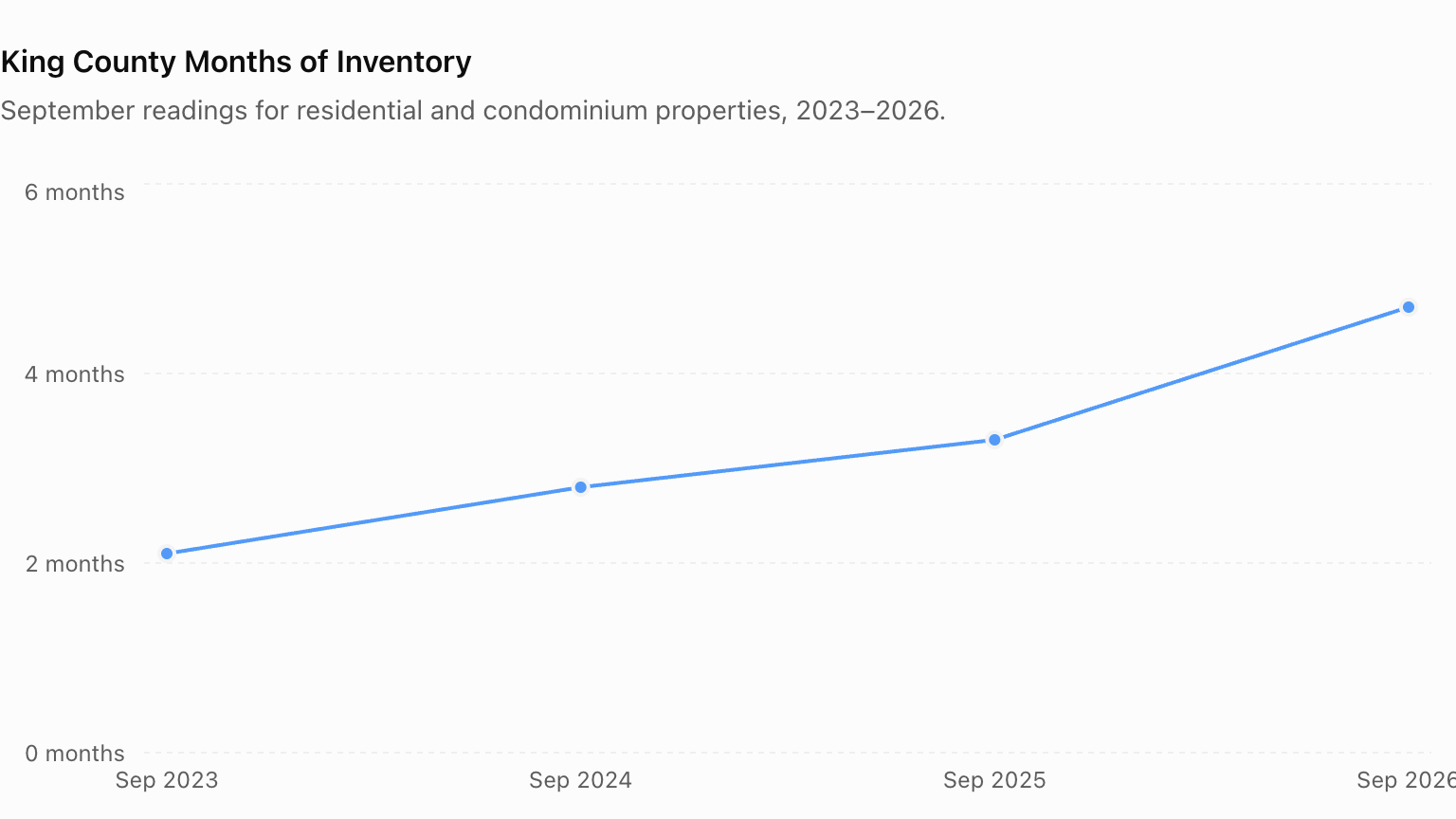
That's an increase of approximately 42% over the past year alone.
New listings and closed sales tell a similar story. Between January and September 2026, King County recorded 34,013 new listings, up about 10% from the same period in 2025. Meanwhile, closed sales declined approximately 9%, from 18,652 to 17,052 transactions.
Taken together, these trends suggest that homes are entering the market faster than completed sales are keeping pace. Months of inventory helps illustrate the effect of that relationship by measuring how long the current supply would take to sell at the prevailing sales pace, assuming conditions remained similar.
What Do These Trends Mean for Buyers and Sellers?
For buyers, increasing inventory can mean more properties to consider and potentially more opportunities to negotiate. Buyers may have greater flexibility to compare homes, evaluate pricing, and make decisions without feeling the same urgency that can accompany a market with very limited supply.
For sellers, more inventory can mean more competition. Pricing a home appropriately, preparing it for market, and understanding how it compares with similar properties become especially important.
That doesn't mean every property will experience the same conditions. Market dynamics can vary by neighborhood, price range, and property type, and a well-priced home can still attract strong interest.
For anyone considering a move in Kirkland, Bellevue, or elsewhere on the Eastside, the takeaway is simple: Understanding local inventory trends can help you make more informed decisions about when and how to buy or sell.
Making Sense of the Market Before Your Next Move
Housing inventory is one of the most useful indicators to watch when evaluating real estate market conditions, but it’s most valuable when considered alongside supply, demand, pricing, and buyer activity. Whether you’re thinking about purchasing your first home, moving to the Eastside, or preparing to sell a property, understanding the local market can help you make more informed decisions.
Want to learn more? Read the full Redfin article on housing inventory for a deeper look at how housing supply affects buyers and the homebuying process.
If you’re considering buying or selling in Kirkland, Bellevue, or the greater Eastside, I’d be happy to help you understand the market conditions that matter most to your goals. Let’s connect to start the conversation.

Meet Veronica
As a Washington native, Kirkland expert, and award-winning agent, Veronica Morss brings unmatched local insight and a client-first mindset to every real estate transaction. With a proven track record in multimillion-dollar negotiations, she blends deep neighborhood knowledge with the latest marketing strategies to help buyers, sellers, and investors succeed across the competitive Greater Seattle market. Supported by eXp Realty’s global reach, Veronica combines hyper-local expertise with world-class resources to deliver exceptional results, especially within the luxury segment. Her commitment to creative solutions, cutting edge strategy, and white glove service makes her a trusted advisor throughout every stage of the real estate journey.
Veronica Morss, Real Estate Broker
206-853-3491